
Quality Assurance and Quality Control in Portugal for Manufactured Plastic Parts and Plastic Tooling
Portugal has a well-established manufacturing industry, particularly in plastic injection molding, tooling, and precision engineering. The country is known for its expertise in producing high-quality plastic parts and molds for industries such as automotive, medical devices, electronics, and packaging. Ensuring high standards in quality assurance (QA) and quality control (QC) is critical for manufacturers and suppliers to meet international regulations, customer specifications, and industry requirements.
Types of Plastic Parts and Tooling produced in Portugal:
-
Plastic Parts Manufacturing
Automotive Plastic Parts
-
Interior Components: Portuguese manufacturers produce dashboard panels, door trims, center consoles, and seatbelt covers, supplying major automotive brands.
-
Exterior Parts: Production includes bumpers, grilles, spoilers, and mirror housings, adhering to stringent quality standards.
-
Engine & Under-the-Hood Parts: Manufacturers supply air ducts, coolant reservoirs, and battery covers, ensuring durability and performance.
-
Lighting Components: Portuguese companies produce headlight and taillight casings, reflectors, and lenses with precision.
Medical & Healthcare Plastic Parts
-
Medical Device Casings: Companies manufacture housings for diagnostic and monitoring devices, meeting medical industry standards.
-
Syringes & IV Components: Precision-molded disposable medical parts are produced for healthcare applications.
-
Prosthetic & Orthopedic Components: Manufacturers supply lightweight and durable medical plastics for prosthetics and orthopedics.
Aerospace & Defense Plastic Parts
-
Aircraft Interior Panels: Portuguese companies produce lightweight, high-strength components for aircraft interiors.
-
Seating & Cabin Components: Manufacturers supply armrests, tray tables, and seat backs for the aerospace industry.
-
Insulation & Safety Covers: Heat-resistant and impact-resistant plastics are produced for aerospace applications.
Electronics & Electrical Plastic Parts
-
Connectors & Insulators: High-performance plastic insulators are manufactured for electrical systems.
-
Casing for Consumer Electronics: Companies produce housings for laptops, smartphones, and appliances.
-
PCB Holders & Wiring Management: Manufacturers supply clips, enclosures, and cable organizers for electronics.
Household & Consumer Goods
-
Kitchenware & Storage Containers: BPA-free food storage solutions and utensils are produced for household use.
-
Furniture Components: Plastic chair shells, armrests, and table parts are manufactured for the furniture industry.
-
Toys & Leisure Equipment: Injection-molded plastic toys, sports equipment, and playground parts are produced for consumer markets.
-
-
Plastic Tooling & Mold Manufacturing
Portugal is known for its high-precision mold-making industry, which serves international markets, especially in Europe and North America.
Injection Molds
- Multi-Cavity Molds – High-volume production for small plastic parts.
- 2K & 3K Molds – Multi-material and multi-color injection molds.
- Thin-Wall Molds – Used for packaging and lightweight applications.
Blow Molds
- PET Bottle Molds – Used in beverage, cosmetics, and pharmaceutical industries.
- Hollow Plastic Parts Molds – Fuel tanks, containers, and storage bins.
Thermoforming Molds
- Packaging Molds – Food trays, clamshells, and medical packaging.
- Automotive & Industrial Molds – Protective covers, panels, and insulation parts.
Compression & Transfer Molds
- Rubber & Silicone Molds – Used for gaskets, seals, and medical products.
- Fiber-Reinforced Plastic (FRP) Molds – Aerospace and industrial components.
Key Regions for Plastic Parts and Tooling Manufacturing in Portugal
Portugal has several industrial regions specializing in plastic injection molding, tooling, and precision engineering. The main areas known for their expertise in plastics manufacturing include:

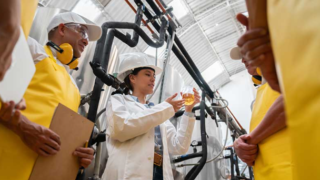
Portugal Plastic Parts and Tooling Advanced Quality Inspection
Marinha Grande – The “Mold Capital” of Portugal
Industry Focus:
- The largest hub for mold-making and plastic injection tooling in Portugal.
- Specializes in high-precision molds for the automotive, medical, packaging, and electronics industries.
- Strong presence of advanced CNC machining, EDM (Electrical Discharge Machining), and automated mold-making technologies.
Key Strengths:
- Home to leading mold manufacturers serving global clients.
- Strong partnerships with universities and R&D centers like Centimfe (Technological Centre for Molds, Special Tooling, and Plastics).
- Frequent investment in Industry 4.0 technologies, automation, and quality assurance systems.
Leiria – Precision Plastics and Injection Molding
Industry Focus:
- Located near Marinha Grande, Leiria is a major center for plastic part production and injection molding.
- Strong presence of high-performance polymer processing for automotive, medical, and industrial applications.
- Many companies focus on bioplastics and sustainable materials.
Key Strengths:
- A well-developed supply chain with mold-makers, material suppliers, and testing labs.
- Companies in Leiria often export plastic components to European and North American markets.
- Active industry groups and associations like APIP (Portuguese Plastics Industry Association).

Portugal Plastic Parts and Tooling Quality Control and Assurance
Aveiro – Industrial and Technical Plastics Manufacturing
Industry Focus:
- Known for industrial plastic components, composites, and technical plastic solutions.
- Presence of thermoforming, rotational molding, and extrusion companies.
- Supplies industries such as agriculture, food packaging, and renewable energy.
Key Strengths:
- Strong connections with the University of Aveiro, which specializes in materials engineering and polymer science.
- Growing focus on circular economy solutions and recycling initiatives in plastics.
Porto & Braga – Automotive and High-Tech Plastic Components
Industry Focus:
- Major hub for automotive plastic components and technical plastics.
- Strong presence of Tier 1 and Tier 2 suppliers for car manufacturers like Volkswagen, Mercedes-Benz, and Stellantis.
- Advanced applications in electronic enclosures, medical devices, and aerospace plastics.
Key Strengths:
- Highly automated factories using robotics and AI-driven quality control.
- Proximity to Porto’s port and logistics network, facilitating global exports.
- Focus on lightweight materials and sustainability in plastics.

Portugal Plastic Parts & Tooling Industry Quality Inspection
Lisbon & Setúbal – Packaging and Consumer Goods Plastics
Industry Focus:
- Major production center for plastic packaging, bottles, and containers.
- Also produces consumer plastic products and industrial storage solutions.
Key Strengths:
- Large-scale production facilities catering to food, beverage, and pharmaceutical packaging.
- Strong compliance with EU packaging regulations and sustainability initiatives (e.g., recycled plastics, biodegradable materials).
- Proximity to Lisbon’s port enables efficient international shipping.
Quality Assurance (QA) in Plastic Manufacturing in Portugal
Quality Assurance in plastic manufacturing focuses on preventive measures to ensure that products are manufactured to meet design specifications, industry standards, and regulatory requirements before production begins. This includes:
Compliance with International Standards
Manufacturers in Portugal typically adhere to internationally recognized quality management systems such as:
- ISO 9001 – Quality Management System (QMS) for general manufacturing
- ISO 13485 – QMS for medical device manufacturing
- IATF 16949 – Automotive quality management system
- ISO 14001 – Environmental management for sustainable production
- ISO 45001 – Occupational health and safety management

Quality Inspector Checking Portugal Plastic Parts and Tooling Quality
Process Validation and Documentation
To ensure consistent quality, manufacturers in Portugal follow strict validation and documentation processes, including:
- Material selection and traceability – Ensuring that raw materials meet industry and regulatory standards (e.g., REACH, RoHS compliance).
- Process capability studies (Cp, Cpk analysis) – Evaluating machine and process stability.
- Failure Mode and Effects Analysis (FMEA) – Identifying and mitigating potential risks in production.
- Design for Manufacturability (DFM) and Mold Flow Analysis – Optimizing mold design before production.
Supplier and Subcontractor Audits
Portuguese manufacturers often conduct supplier audits to ensure that raw materials, tooling, and outsourced processes meet quality and compliance requirements. This includes factory audits, capability assessments, and periodic performance reviews.
Quality Control (QC) in Plastic Parts and Tooling Manufacturing
Quality Control involves inspection and testing procedures to ensure that finished plastic parts and molds meet specifications before delivery.
In-Process and Final Inspections
QC teams perform inspections at different production stages, such as:
- Incoming raw material inspection – Verifying plastic resin properties (e.g., tensile strength, melt flow index).
- First Article Inspection (FAI) – Checking initial production samples against specifications.
- In-process inspection – Monitoring critical parameters during molding (e.g., temperature, pressure, cycle time).
- Final inspection – Verifying dimensional accuracy, surface finish, and functional performance.

Advanced Level Portugal Plastic Parts and Tooling Quality Control Service
Advanced Testing and Measurement Techniques
Portuguese plastic manufacturers use advanced testing methods to ensure product compliance:
- Dimensional Inspection – Using Coordinate Measuring Machines (CMM), optical comparators, and laser scanning.
- Mechanical Testing – Tensile, impact, hardness, and fatigue testing for durability assessment.
- Thermal Analysis – Differential Scanning Calorimetry (DSC) and Thermogravimetric Analysis (TGA) to check thermal properties.
- Chemical and Environmental Testing – Ensuring compliance with REACH, RoHS, and other material safety regulations.
Mold and Tooling Quality Control
Portugal is known for high-precision mold manufacturing, particularly for injection molding. QC measures for molds include:
- Moldflow simulation analysis to optimize part quality and minimize defects.
- CNC machining and EDM process validation to ensure tooling precision.
- Mold trial runs and first-shot analysis to verify performance before full-scale production.
- Maintenance and wear assessment to ensure mold longevity.
Challenges and Best Practices in Plastic Manufacturing QA/QC in Portugal
Common Quality Challenges
- Dimensional stability issues due to material shrinkage or warpage.
- Surface defects like flow marks, weld lines, or sink marks.
- Material inconsistency leading to variations in mechanical properties.
- Tooling wear and degradation affecting precision over time.

Portugal Plastic Parts & Tooling Quality Control Service
Best Practices for QA/QC Improvement
- Implement automated inspection systems to reduce human error.
- Adopt real-time monitoring (Industry 4.0) for process control.
- Conduct regular mold maintenance and calibration to extend tooling lifespan.
- Use lean manufacturing and Six Sigma methodologies for continuous quality improvement.
Portugal’s plastic parts and tooling industry is highly concentrated in key regions such as Marinha Grande (molds), Leiria (injection molding), Aveiro (industrial plastics), Porto/Braga (automotive), and Lisbon/Setúbal (packaging). Each region has developed specialized capabilities, strong R&D networks, and high-quality manufacturing processes to meet global industry demands.
Would you like a deeper analysis of specific companies or industry trends in these regions?
Related Blog Posts





Related Services

GET READY TO SECURE YOUR SUPPLY CHAIN
Get valuable advices, tips, recommendations from our quality management experts and inspection specialists
CONTACT US NOW ! Feel the form below.
